
1. Define the sample package before manufacture
Record the part number, drawing revision, material, quantity and supply condition of the samples. State whether they represent the intended production route or a different preliminary route. Agree any required material, dimensional, finish or test records. If the customer has its own submission format, supply that format with the enquiry.
2. Connect each result to the part being checked
Use identifiers that allow the buyer to match the received part, the applicable drawing and the submitted records. List the features or requirements evaluated and the acceptance basis. Where the order requires batch or material traceability, define the identifiers and records to be supplied rather than relying on an unqualified statement that the parts are traceable.
3. Keep open items and deviations visible
Record a missing report, an unverified characteristic or a proposed dimensional deviation explicitly. Give each item an owner and a proposed resolution. A result outside the agreed requirement should not be hidden by changing the inspection sheet or by treating an unanswered email as approval. Any acceptance of a deviation needs the authorised buyer decision.
4. Separate the different approvals
Dimensional review, material-document review, assembly evaluation and release of a production batch may be separate decisions. State which steps are required for the project and who makes each decision. A buyer acknowledging receipt of a sample does not automatically authorise production.
5. Create an unambiguous release record
Record the approved revision, the approval scope, any accepted exceptions and the quantity or stage released. Keep the approval connected to the quotation and purchase order. If a later drawing change affects the accepted basis, ask the buyer to define the additional review needed before the revised work proceeds.
Match a sample photo to the records that support it
For a flange-shaped part like the components shown, the central opening, hole pattern and mating face may need different checks. A photograph helps identify the features; the approved drawing defines the requirements. Use the prompts below for your own sample review.
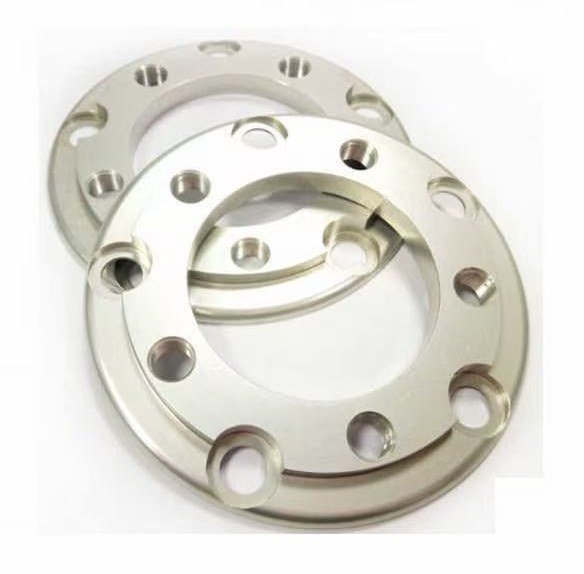
- Sample and photo
- Give the physical sample an identifier and record it with the photo filename and view. Identify each sample separately when several parts appear in one photograph.
- Drawing and feature
- Record the drawing number, revision and feature reference for the bore, hole pattern or mating face being reviewed. Copy the requirement from the approved document, including units and the applicable datum or finish note.
- Result and supporting record
- Connect each result to its report number, page or characteristic reference and sample ID. Keep a missing result marked as not checked; a surface photograph cannot establish material grade or an unmeasured tolerance.
- Decision and released scope
- Record who reviewed the evidence, any open items and the specific stage or quantity released. A completed photograph list or a received report does not itself authorise production.
Download the worksheet with sample-to-record fields
Link to this sample-review section for your purchasing and quality teams.
Example approval record wording
Samples [identifiers] were reviewed against drawing [revision] and requirements [references]. Completed reviews: [list]. Open items: [list]. Decision by [authorised person]: [hold / additional review / release of defined stage]. Approved exceptions, if any: [reference]. Production quantity or stage released: [scope].
Information to collect
- Part number, drawing revision and sample identifiers
- Sample quantity and manufacturing/supply condition
- Required report list and received report references
- Characteristics checked and acceptance basis
- Buyer assembly or application evaluation status
- Open items, deviations, owners and decisions
- Authorised approval person, date and evidence
- Released quantity/stage and applicable exceptions
Put the information to work
Send the available files and identify open questions. Keep confidential customer information out of public posts; share authorised project files directly for review.
Inspection scope review · Email Kai your requirements
Further reading: SFSA information for steel-casting buyers. This JK Casting worksheet organises purchasing information; application-specific design and acceptance requirements must come from the approved project documents.