The short answer
JK Casting casts gearbox and reducer housings, end covers and carriers to the buyer’s drawing, normally sand cast in grey or ductile iron, and CNC-machines the bearing bores, joint faces, dowel holes and threaded ports. A housing is quoted as a component, not as an assembled gearbox.
Common types
- Gearbox and reducer bodies for industrial machinery, with walls, ribs and cored passages planned from the drawing.
- Heavy equipment housing castings, including gearbox bodies, covers and carriers for construction equipment drivetrains.
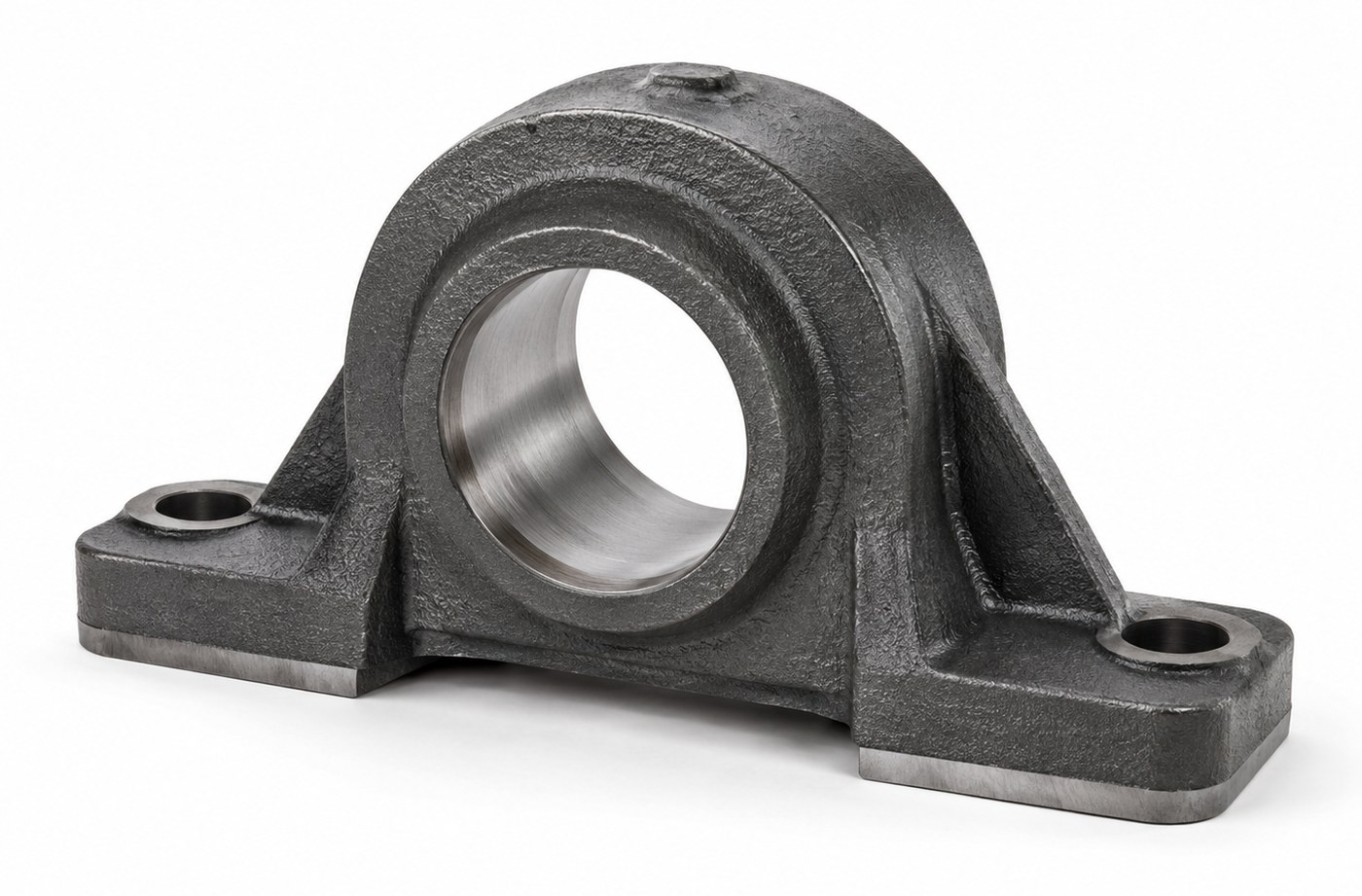
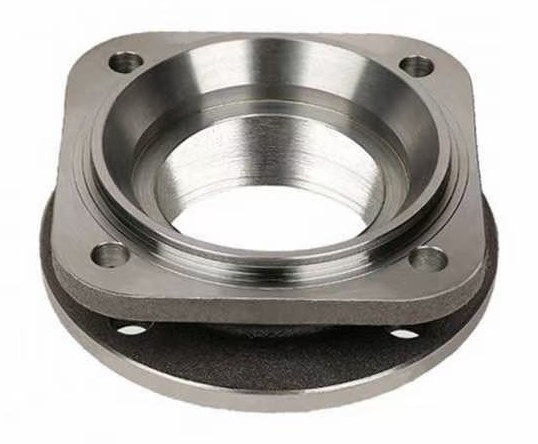
- End covers and carriers machined on the bearing bores and sealing faces.
- Gearbox-adjacent housings for agricultural machinery, reviewed from the individual drawing.
Bearing housings and pillow block housings are covered on the cast iron bearing housings page.
Materials and grades
Grey (gray) iron is the usual starting point for a housing that needs stiffness, vibration damping and easy machining, for example HT250 / EN-GJL-250 / ASTM A48 Class 35. Ductile iron is specified when the housing takes impact or higher stress, for example QT450-10 / EN-GJS-450-10 / ASTM A536 65-45-12. Carbon steel is reviewed when the drawing calls for it. The grade on your drawing governs.
See the gray iron grades chart, the ductile iron grades chart and ductile vs grey iron.
Casting route
Housings with thick walls, ribs and cored bores are sand cast, including resin-coated shell moulds where a cleaner surface helps. A machining allowance is left on the bores and faces that will be finished, and the as-cast surfaces are kept as shown on the drawing.
Typical machined features
- Bearing bores, with their position and alignment reviewed against the drawing before quotation
- Joint faces, mounting faces and sealing faces
- Dowel holes and bolt holes
- Threaded ports
We machine the housings we cast. Machining-only orders for housings cast elsewhere are outside our supply scope.
What to send for a quote
- The drawing revision, with a 3D model if you have one
- The full material designation and its standard
- The machined surfaces, datums and bore alignment requirements
- Which surfaces stay as cast, and the paint or primer required
- The supply scope: the housing only, without gears, shafts or bearings
- Quantity per part number, the first batch and the expected repeat demand
The machined housing RFQ checklist lists these points in detail.
How JK Casting makes gearbox housings
JK Casting, founded in 2002 in Gaomi, Shandong, China, pours grey iron and ductile iron as regular sand-cast materials, with an annual capacity of about 5,000 tons and about 60 employees, and CNC-machines the housings it casts. Each drawing is quoted separately, with tooling and unit price on separate lines. Orders are small to medium batches and repeat deliveries; one- or two-piece orders are rarely economical because a casting needs tooling before the first part is poured.
Related: industrial machinery castings · construction and heavy equipment castings · machined castings
Need this part cast to your drawing?
Send the drawing for a quote — we reply within 24 hours.
Frequently asked questions
Do you machine gearbox housings after casting?
Yes. Housings we cast can be CNC-machined on the bearing bores, joint faces, dowel and bolt holes and threaded ports shown on the drawing. Bore position and alignment are reviewed against the drawing before quotation.
Grey iron or ductile iron for a gearbox housing?
Many gearbox housings are grey iron, for damping and easy machining, for example HT250 / EN-GJL-250. Ductile iron, for example QT450-10, is specified when the housing takes impact or higher stress. The designer decides.
Do you supply complete gearboxes?
No. We quote the cast and machined housing, cover or carrier as a component. Gears, shafts, bearings and assembly are outside the supply scope.
Can you machine a housing cast by another foundry?
No. We machine only the castings we pour, so machining-only orders are outside our supply scope.