
Industrial Machinery Parts
Cast Iron Bearing Housings & Industrial Machinery Castings
JK Casting makes industrial machinery castings to your drawing, including cast iron bearing housings, pillow block housings, gearbox housings, bases and brackets, raw or machined. Send drawings for a quotation.
JK Casting reviews industrial machinery parts built to order for pumps, motors, gearboxes, and machines. Send a drawing, 3D file, sample, or worn part; our Gaomi works checks material, casting route and associated machining, fit surfaces, finish, inspection, and packing before quotation.
- Drawing-based quotation
- Casting + machining
- Inspection to specification
Representative parts from our product gallery. Material, process and inspection for your part are confirmed against your drawing.
Typical Components
Parts we manufacture from your drawings
Source housings, supports, bases, and connection parts for OEM equipment, second-source programs, or replacement supply. Send the drawing, material, initial batch, and annual forecast to compare the manufacturing scope.
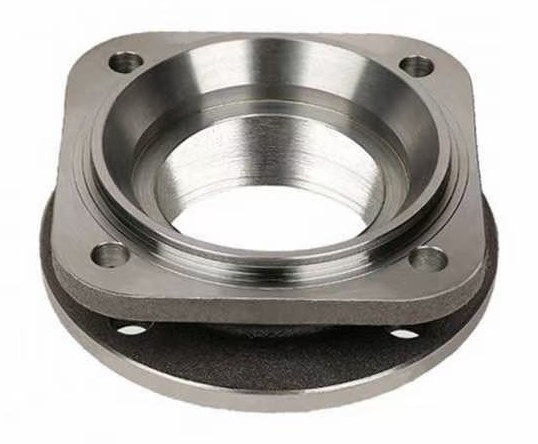
01 / Housings
Flanged hubs & housing interfaces
The pictured component has a stepped central opening, mounting holes, and machined faces. For a similar part, define the bore and shoulder, hole pattern, mating face, and the drawing datums that connect them.
Specify the material, finished supply condition, and feature-level report requirements. Dimensions and equipment compatibility are established from your controlled drawing.
For a custom cast iron bearing housing or bearing support, send the finished-part drawing with the bearing bore, shoulder, mounting faces, and relevant datums identified. Specify the material grade, governing standard, required fits, surface finish, and order quantities. The gray iron, ductile iron and cast carbon steel grade charts show the common standards, and sand casting vs investment casting compares the casting routes.
JK Casting reviews the casting and machining requirements together. Our regular material families include carbon steel and ductile and grey iron castings; the material, manufacturing route, achievable tolerances, and inspection scope are confirmed for each part before quotation. Agree any dimensional reports, sampling requirements, material records, and traceability needed for acceptance.
Prepare a bearing housing or bearing support RFQ →
02 / Structural Parts
Blocks, bases & mounting plates
Load-bearing components for machinery assemblies, supports, and mounting systems.
Discuss your drawing ->
03 / Connection Parts
Connectors & threaded bodies
Use the threaded body as a reference for connection geometry. Identify the thread designation, mating component, seating surfaces, and any features to remain as cast.
State whether the order covers the body only or includes mating hardware, finishing, and assembly checks. A photograph does not establish a thread standard or a pressure rating.
Send the connection drawing ->
04 / Spare Parts
Replacement machined components
Drawing- or sample-based replacements for maintenance, repair, retrofit, and equipment rebuilding.
Discuss your drawing ->Bearing housing RFQs
Cast iron bearing housings and pillow block housings
Bearing housings, pillow block housings, flanged bearing housings and bearing supports are made to the buyer’s drawing, not from a catalog. Grey iron is a common choice because it casts and machines easily and damps vibration; ductile iron is used where the housing takes shock or bending, and carbon steel where the drawing calls for it. Housings are sand cast, including resin-coated sand shell moulds where a cleaner surface helps.
Machined features
- Bearing bore and locating shoulder
- Base or flange mounting face and the bolt or slot pattern
- Seal grooves, cover faces and lubrication holes shown on the drawing
- Center height from the base to the bore axis
Bore fits and position tolerances are reviewed against the drawing before quotation.
Define the housing on the drawing
State the bearing bore size and fit, the center height, the bolt-hole spacing, whether the housing is solid or split, and the seals or covers that mount on it. Mark which surfaces stay as-cast. Housings can be supplied raw for your own machining line or CNC-machined by JK Casting; machining covers the castings JK Casting supplies.
Housings and machinery castings: material, route and machined features
Scroll sideways to see all columns
| Part | Usual materials | Casting route | Typical machined features |
|---|---|---|---|
| Bearing housings and pillow block housings | Grey iron, ductile iron | Sand casting | Bearing bore, shoulder, base face, bolt holes |
| Flanged bearing housings and bearing supports | Grey iron, ductile iron, carbon steel | Sand casting | Bore, flange face, bolt circle |
| Gearbox and reducer housings | Grey iron, ductile iron | Sand casting | Bearing bores, joint faces, dowel holes, threaded ports |
| End covers and carriers | Grey iron, ductile iron | Sand casting | Seal seats, mating faces, bolt holes |
| Bases, blocks and mounting plates | Grey iron, carbon steel | Sand casting | Mounting faces, hole patterns |
| Brackets, hubs and connection parts | Ductile iron, carbon steel | Sand casting or investment casting | Bores, threads, mounting holes |
Typical starting points, not design rules. The grade, route and tolerances for each part are confirmed against the drawing. Grades and equivalents: gray iron, ductile iron and cast steel grade charts.
Gearbox housing RFQs
Cast iron gearbox housings and end covers
Send the housing or cover drawing for casting and machining review. Define the component supply scope separately from gears, shafts, bearings and the assembled gearbox. Material and manufacturing feasibility are confirmed for the individual part.
Gearbox and reducer housings, end covers and carriers are normally sand cast in grey iron or ductile iron, with the walls, ribs and cored passages planned from the drawing. Bearing bores, joint faces, dowel holes and threaded ports are CNC-machined to the drawing datums; the position and alignment tolerances of the bores are reviewed against the drawing before quotation.
Identify the interfaces on the drawing
- Bearing bores, shoulders and their relationship to the mounting datums
- Mating faces, dowel locations, bolt patterns and joint alignment
- Seal seats, cover interfaces and any oil passages or threaded ports
- Specified iron grade, heat-treatment condition and machined surface finishes
- Leak or other functional test requirements, if applicable, for feasibility review
Keep replacement and repeat orders traceable
For a replacement, include the existing part reference and explain which surfaces are worn or damaged. A used sample helps identify the component; the intended dimensions, fits and material still need an approved definition.
For repeat supply, identify the drawing revision, quantity per part number, sample approval requirements and inspection records. Request raw castings or castings with specified machining as distinct quotation options.
Use the housing RFQ worksheet to prepare the interfaces and acceptance requirements, then send your files for review.



Why Buyers Contact Us
When a standard catalog part is not enough
Industrial machinery projects often need more than a stock component. The part may be obsolete, redesigned, integrated into an assembly, or require both as-cast surfaces and precisely machined interfaces.
Old parts are difficult to source
Quote replacements from drawings, samples, or dimensional information.
Batch and repeat production
Evaluate the practical process around annual quantity and repeat demand.
Cast + machined requirements
Combine cast geometry with bores, faces, threads, fits, and mounting features.
Supplier review is required
Clarify material, tolerances, coating, inspection, and packing before quotation.
Project Workflow
From drawing review to export-ready parts
Connect drawing review, casting and machining requirements, and repeat-order planning. The quotation defines the complete manufacturing and delivery scope.
Drawing & requirement review
Part function, material, quantity, tolerances, machining, coating, and inspection.
Process and quotation
Manufacturing route, tooling considerations, lead time, and commercial quotation.
Casting production
Produce the rough component while retaining the required cast geometry and allowance.
Machining & finishing
Complete critical interfaces, deburring, surface treatment, and assembly where required.
Inspection & delivery
Verify specified characteristics, protect the parts, and prepare export packing.
What to include with your RFQ
More complete input helps us review the correct process and return a more useful quotation.
- 2D / 3D drawing or sample
- Material grade and its standard
- Machining scope: which surfaces are machined and which stay as-cast
- First-batch quantity and expected repeat-order quantity
- Critical fits and tolerances
- For bearing housings and supports, identify the critical bores, shoulders, mounting faces, datums, and required inspection records on the drawing.
- Surface treatment
- Inspection and packing needs
Application-Based Quotation
Quote the part around its actual use
Send the application environment, operating load, mating dimensions, coating needs, annual demand, and any inspection documents that matter to your project.
Drawing-basedNo generic price list for custom parts.
Technical reviewQuestions are linked to the actual requirement.
Export supportDocumentation and packing considered before shipment.
Supply scope
What an industrial casting order covers
The quotation follows the drawing. These are the boundaries that apply before a price is given.
Parts
Bearing housings, gearbox housings, bases, brackets and hubs for pumps, motors and machines.
Process
Sand casting and lost-wax investment casting, with in-house CNC machining of those castings. See both casting processes.
Materials
Carbon steel, ductile iron and grey iron are regular. Stainless and alloy steel are reviewed part by part.
Condition
Raw or machined. Heat treatment and galvanizing are arranged to the agreed specification.
Boundaries
No die casting. No fixed upper part-weight limit. Inspection equipment is in-house. Machining-only orders are outside the supply scope.
Other industries: power line hardware, oilfield parts, construction equipment, agricultural machinery. Inspection records are agreed on the quality control page.
Buyer FAQ
Questions before an industrial casting quotation
Can JK Casting make industrial machinery castings from my drawing?
Yes. Cast iron bearing housings, pillow block housings, gearbox housings, bases, brackets and hubs are quoted from your drawing, raw or CNC-machined. Standard catalog bearing units are not supplied; send the housing drawing. Regular materials are carbon steel, ductile iron and grey iron. Stainless and alloy steel are reviewed part by part.
What should I send for an industrial casting quotation?
Send the drawing, material grade, quantity, tolerances, and any surface or heat-treatment requirement. Heat treatment and galvanizing are arranged to the agreed specification. Lead time is confirmed in the quotation according to quantity and complexity.
Which casting processes are used for machinery parts?
Sand casting and lost-wax investment casting. Die casting is not offered. There is no fixed upper part-weight limit; each part is reviewed from its drawing. Inspection equipment is in-house. Machining-only orders are outside the supply scope.
Can you make gray iron bearing housings to drawing?
Yes. Gray iron bearing housings are sand cast to the customer’s drawing and can be CNC-machined, including boring the bearing seats, facing the mounting surfaces and drilling the bolt holes. Send the drawing with the grade, bore tolerances and quantity for review.
What material is best for a cast iron bearing housing?
Grey iron is a common choice for bearing housings and pillow block housings because it casts and machines easily and damps vibration. Ductile iron is used when the housing must take shock or bending loads, and carbon steel when the drawing calls for it. The grade on your drawing governs.
Do you machine gearbox housings after casting?
Yes. Gearbox housings JK Casting casts can be CNC-machined on the bearing bores, joint faces, dowel and bolt holes and threaded ports shown on the drawing. Bore position and alignment tolerances are reviewed against the drawing before quotation. Machining-only orders for housings cast elsewhere are outside the supply scope.
Send your machinery part drawings for quotation.
Drawings, samples, material requirements, quantities, and technical specifications are welcome.
Before requesting a quotation
Machined housing RFQ: make the finished interfaces clear
Includes an editable worksheet for your purchasing and engineering review.