
GY
Geometry and parting
Review draft, split lines, undercuts, wall changes, and mould release before committing to tooling.
Our Gaomi factory, established in 2002, supplies resin-coated sand and lost-wax investment castings. Send your drawing, material and quantity for a raw-casting or CNC-finished quotation. Carbon steel, iron and stainless steel requirements are reviewed by part.
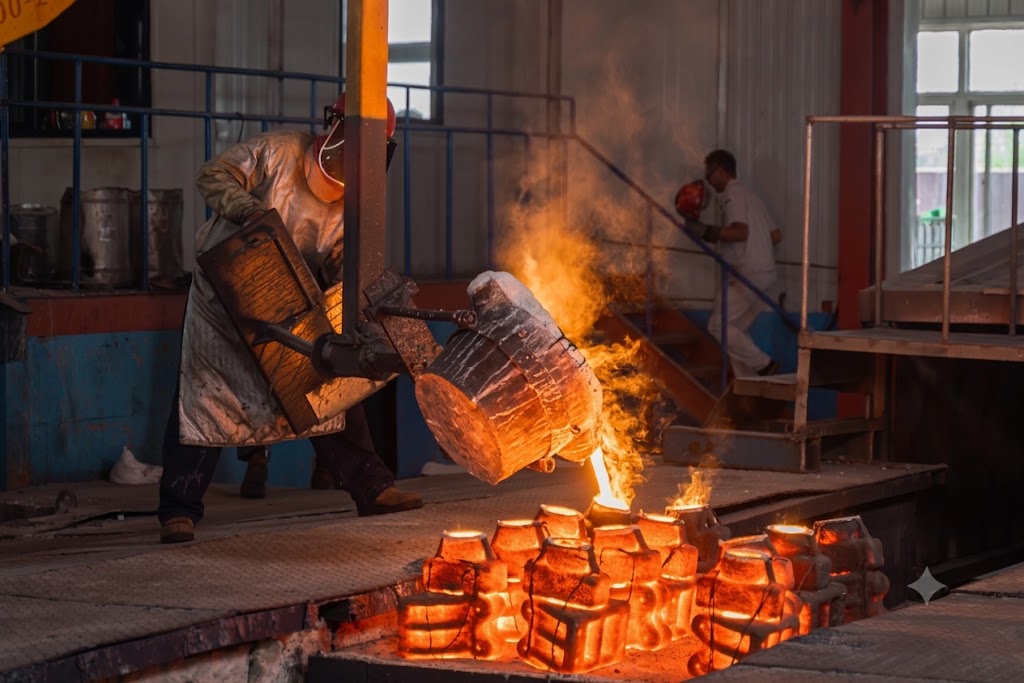
Casting cost depends on parting lines, cores, wall transitions, tooling life, and surfaces that need machining. See application requirements for heavy equipment castings and power line fittings, or review the finished-part scope for machined castings.
Review draft, split lines, undercuts, wall changes, and mould release before committing to tooling.
Confirm internal passages, core support, cleanout access, and the features most sensitive to core movement.
Match the specified material and treatment condition to section size, service duty, and inspection needs.
Use order quantity and repeat demand to choose a practical pattern, mould, and sampling plan.
Separate as-cast dimensions from machined features and reserve stock only where final control is required.
Define material records, visual limits, dimensions, test scope, and any agreed repair criteria before release.
Investment casting, also called lost-wax casting, uses a wax pattern to form an expendable mould. JK reviews this route for drawing-based industrial components alongside resin-coated sand casting. The choice depends on geometry, material, finish and order quantities.
Send the drawing revision, 3D model if available, cast grade and estimated weight. Mark internal passages, thin sections and the surfaces that must be machined.
Identify critical dimensions, material records, surface acceptance and any special tests. Tooling, sample approval and repeat-order requirements belong in the quotation.
Request raw castings or a combined casting and machining order, with the required heat treatment, finish, inspection and packing scope.
See the material specification guide for grade, standard, treatment condition and report requirements.
Carbon steel is a regular material family for JK's drawing-based parts. We assess sand or investment casting against the component geometry and required properties. State the cast grade, governing standard and heat-treatment condition.
Send stainless steel component drawings for part-specific review. Include the exact cast grade, service environment, finish and required material records. Grade availability, casting route and test scope are confirmed in the quotation.
For suitable housings, hubs, bases and supports, specify the iron grade, strength or hardness requirements and delivery condition. We review the casting and any machined interfaces together.
Machining is offered with the castings we supply. Mark bores, faces, threads and tolerances on the finished drawing, then review component features and RFQ requirements.
Send a casting drawing for quotation with quantity per part number, expected annual demand and delivery batches.
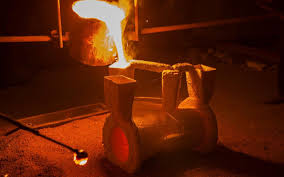
A clear raw-casting definition connects the finished drawing to pattern construction, core location, material condition, machining stock, and agreed inspection points.
Check alloy, section changes, parting, cores, stock, quantity, and acceptance requirements.
Define pattern construction, core arrangement, gating approach, and first-sample checks.
Inspect the initial raw casting, record deviations, and close agreed tooling corrections.
Control material, casting condition, dimensions, testing, preservation, and packing.
Keep the raw-casting requirement, material condition, sample result, and acceptance criteria in one traceable production record.
Identify parting, cores, casting dimensions, machining stock, and revision status.
Record the agreed grade, condition, reports, and project-specific testing scope.
Compare the first casting with agreed dimensions and close tooling corrections before repeat work.
Define visual, dimensional, NDT, and repair requirements instead of deciding them after production.
Final requirements should be tied to the drawing, material specification, purchase order, and approved casting record.
Share the strongest part evidence available. We will review geometry, cores, alloy, tooling, stock, treatment, inspection, and the practical quotation route.