
Figures used in this guide
This guide uses the typical figures JK Casting publishes for its own production. The tolerance and route for your part are always confirmed against the drawing.
How each process works
- Pattern
- Moulding and core setting
- Pouring
- Shakeout and cleaning
- Machining
- Wax injection
- Tree assembly
- Shell building
- Dewaxing
- Pouring
- Cut-off and cleaning
- Machining
Side-by-side comparison
| Decision point | Sand casting | Investment casting (lost wax) |
|---|---|---|
| How the mould is made | Sand is packed around a pattern; cores form internal passages | A wax pattern is injected in a metal die, coated in a ceramic shell, then melted out |
| Typical as-cast tolerance (JK) | ISO 8062 CT8–CT10, depending on geometry | ISO 8062 CT5–CT7, depending on geometry |
| As-cast surface | Rougher; functional surfaces are usually machined | Smoother; fine details and lettering come out cast |
| Typical part size | Small to large and heavy parts; JK has no fixed upper weight limit, each part is reviewed | Mostly smaller, detailed components |
| Regular materials at JK | Carbon steel, gray iron, ductile iron | Carbon steel; stainless steel reviewed part by part |
| Geometry | Best for robust shapes, thick sections and large cored parts | Best for complex shapes with ribs, bosses, thin features and several functions in one part |
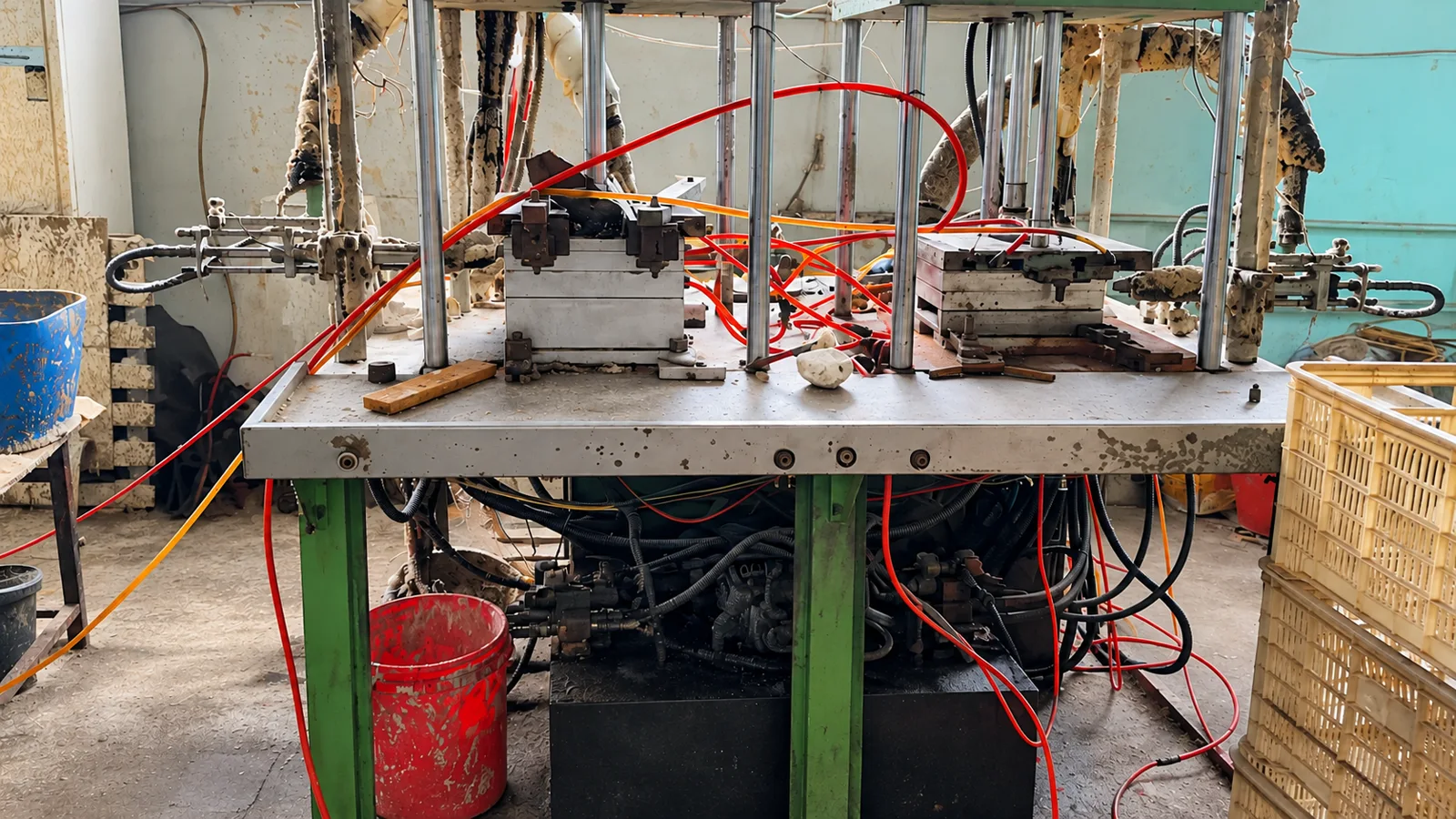
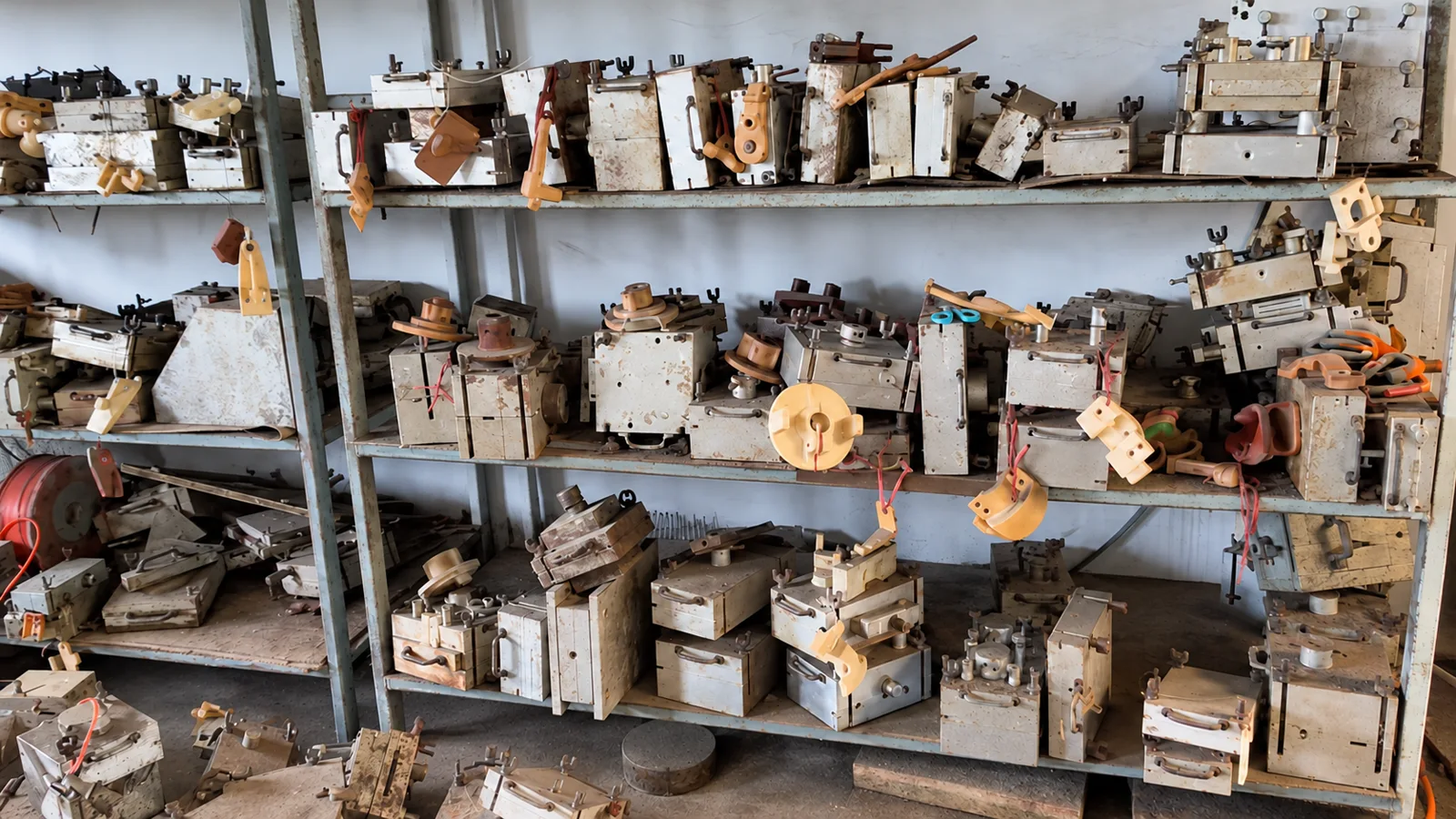
| Tooling | Pattern and core boxes | Metal wax-injection die |
| Machining after casting | Usually more stock to remove on functional faces | Often less machining; sometimes only holes and threads |
| Cost behaviour | Usually lower cost per kg, especially for larger iron parts | Higher cost per kg, but can lower the cost of the finished part by removing machining |
Tooling for both routes is quoted separately for each drawing, and the cost depends on size, cores and the number of cavities.
Choose sand casting when…
- The part is gray or ductile iron, or a large carbon steel part.
- The part is large or heavy, or has thick sections and large internal cores (housings, bases, hubs, brackets).
- Most critical surfaces will be machined anyway, so tighter as-cast tolerances add cost without value.
- You want lower tooling cost for a part with a simple, robust shape.
Typical JK examples: gearbox and bearing housings, machine bases, agricultural and construction machinery brackets and hubs.
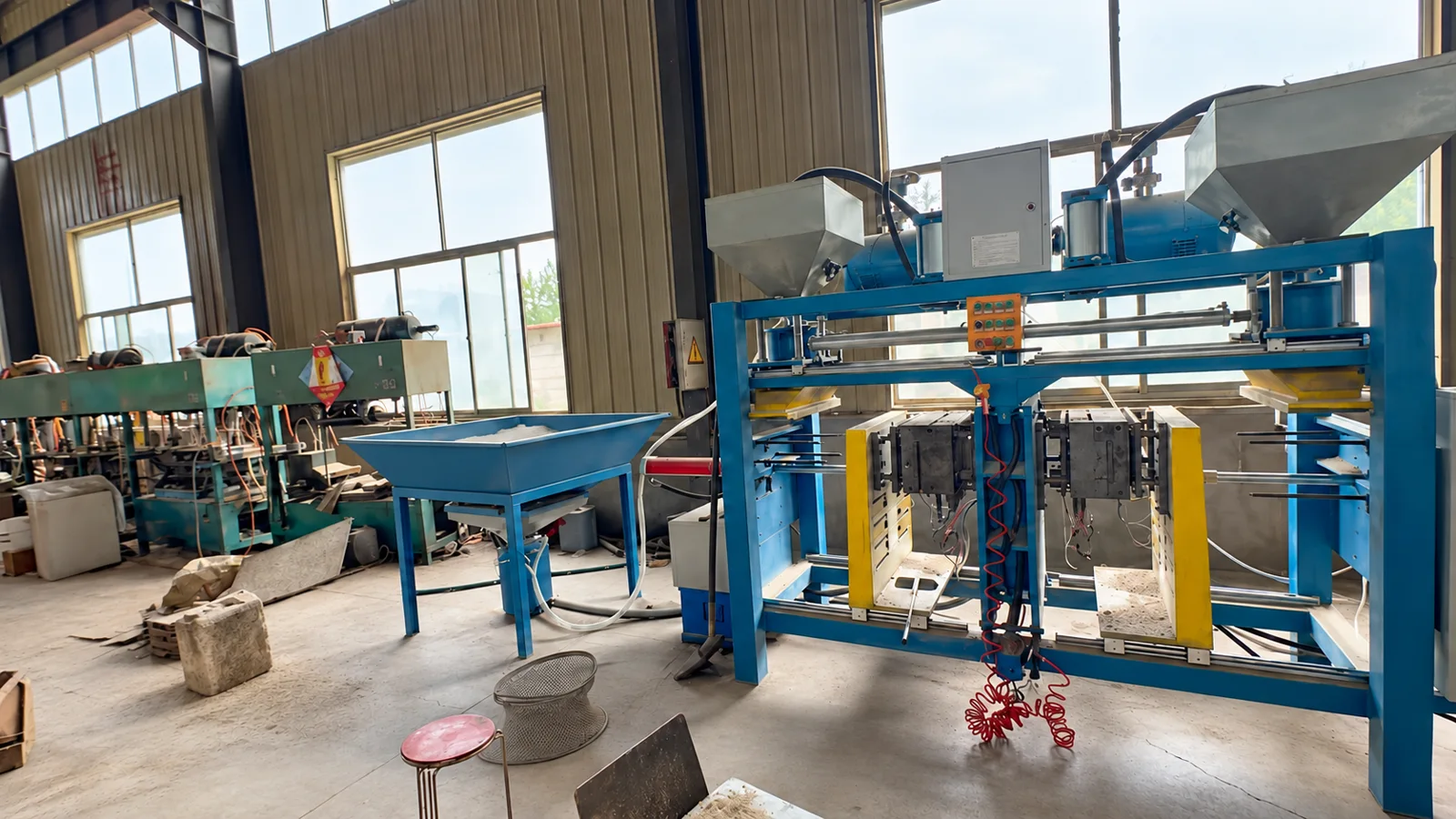
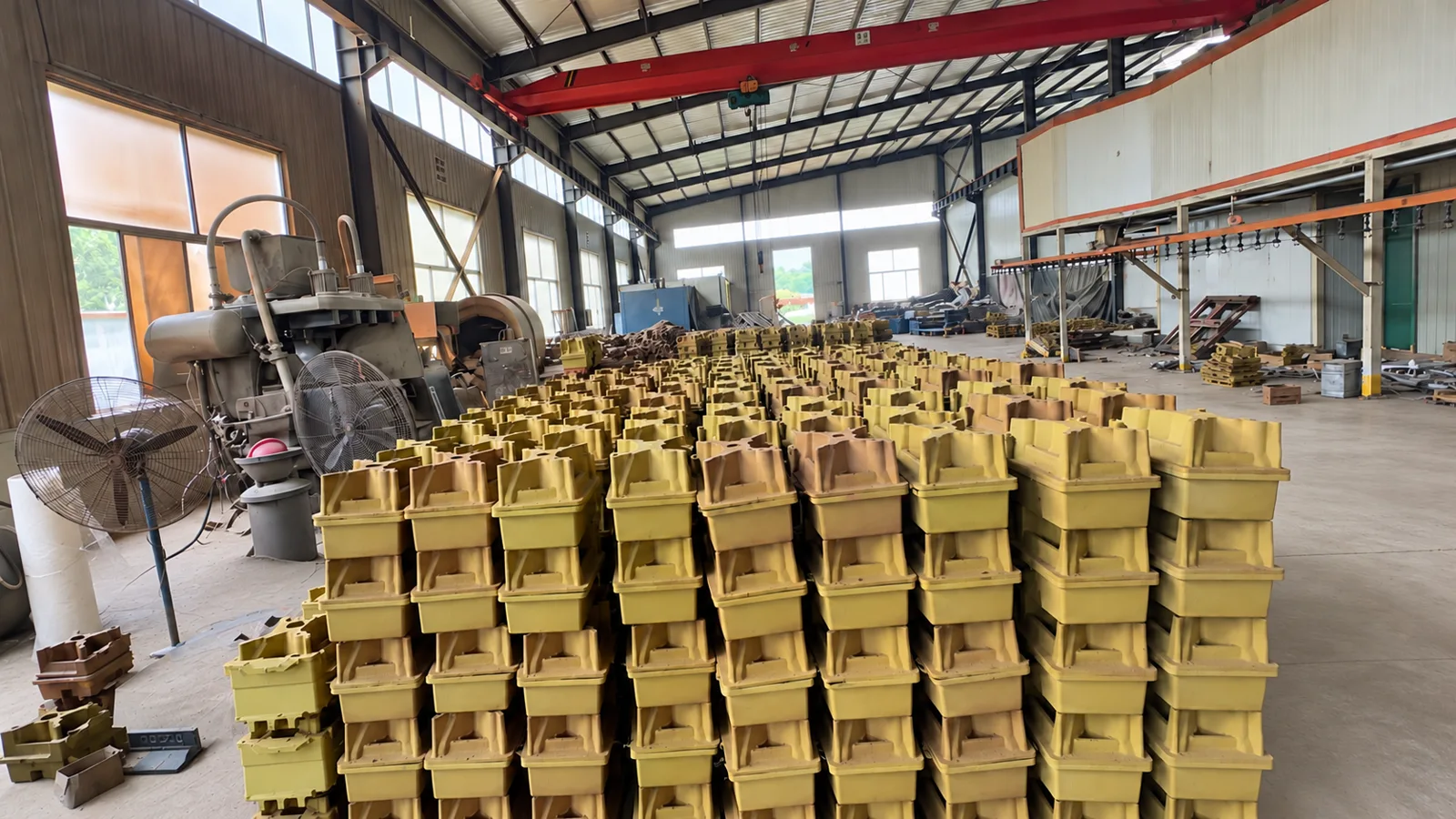
JK’s sand casting routes include resin-coated sand shell moulds for parts that need a cleaner surface and closer tolerance than conventional sand moulds.


Choose investment casting when…
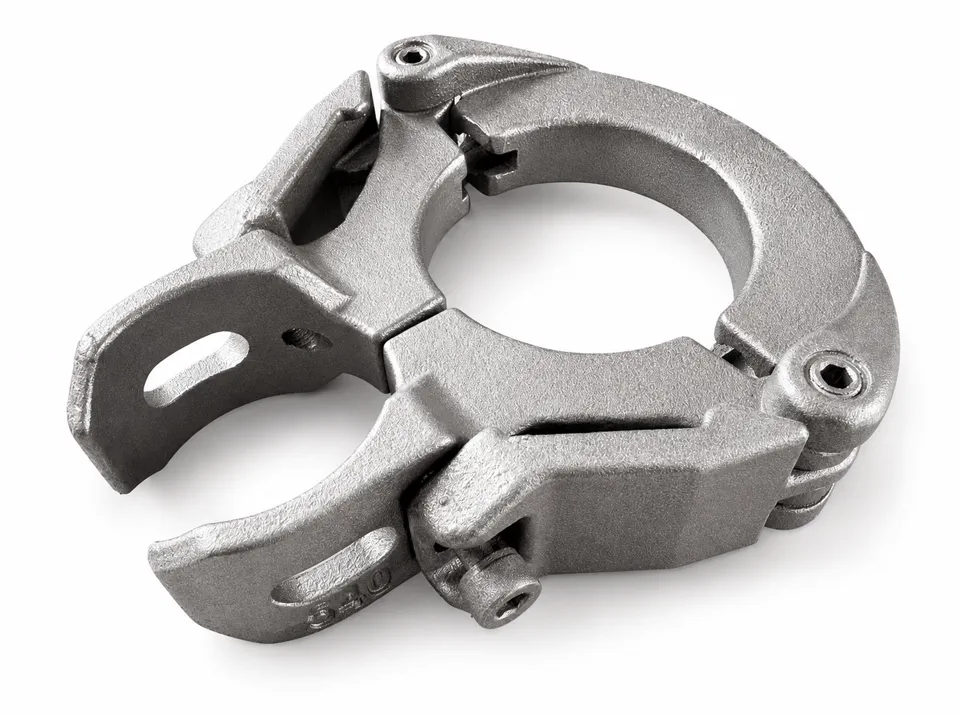
- The part is a steel component with complex geometry: ribs, bosses, curved profiles, thin features.
- You want near-net shape so that only holes, threads or a few faces need machining.
- A better as-cast surface or fine detail matters, for example visible surfaces or small radii.
- The part is small to medium size and ordered in repeat quantities.
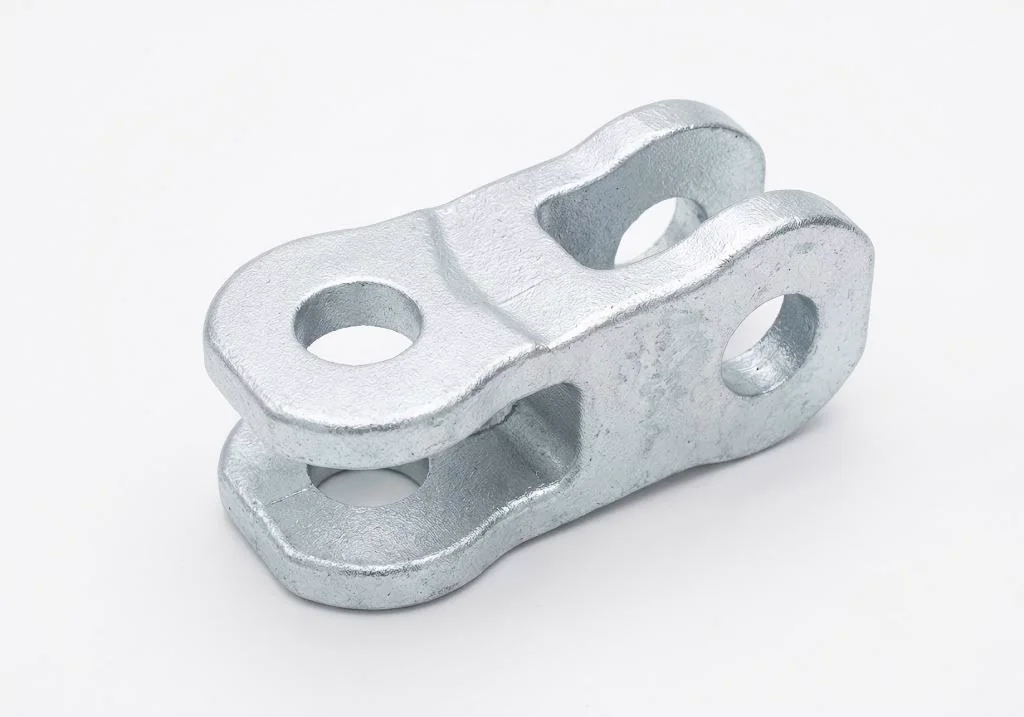
Typical JK examples: carbon steel power-line fittings and clevises, small brackets and connectors with several functional features.
Five questions to answer before choosing
- What is the material and standard? Iron grades point strongly to sand casting; steel parts can go either way.
- Which features are critical, and will they be machined? If a feature is machined, the as-cast tolerance there matters less.
- How big and heavy is the part? Large and heavy parts point to sand casting.
- What is the annual quantity and how often will you reorder? Repeat volume helps pay back tooling, and near-net shape saves more machining over many parts.
- What does the finished part cost, not just the casting? Compare casting + machining + inspection for both routes, not the casting price per kg alone.
If you are unsure, send the drawing and ask for both routes to be reviewed. JK reviews the drawing before quoting and confirms which route, tolerance and machining scope fit the part.
What to send with the RFQ
- 2D drawing with tolerances, plus a 3D model if available
- Material grade and standard
- Annual quantity and expected batch size
- Which surfaces are machined and which stay as-cast
- Inspection and documents required (for example a dimensional report or EN 10204 3.1 certificate)
Use the RFQ readiness checklist or send the drawing directly.
Related guides: Compare casting quotations · First article approval · Ductile iron grades chart
Frequently asked questions
Is investment casting more accurate than sand casting?
Usually yes. JK’s typical as-cast tolerance is ISO 8062 CT5–CT7 for investment casting and CT8–CT10 for sand casting, depending on geometry. Critical features are still confirmed against the drawing and machined where needed.
Is investment casting more expensive?
Per kilogram it usually is. For a complex steel part, though, the finished cost can be lower because less machining is needed. Compare the finished-part price, not only the casting price.
Can ductile iron be investment cast?
It is possible in general foundry practice, but at JK ductile and gray iron parts are normally sand cast. Steel parts are the usual candidates for investment casting.
Are samples free?
Both routes need tooling before the first castings can be made, so samples are made from the production tooling and quoted with the tooling. The first article approval guide explains how samples are reviewed.