Pin and hole fit
Identify hole diameters, spacing, alignment, and the mating pin requirements.
Power Line Hardware
Custom cast and machined clevises, shackles, clamp bodies, brackets, and related overhead line components, built to your drawing or sample rather than sold from a stocked catalog. Send your drawing, material grade and governing standard, quantity, and coating requirements for a part-specific quotation.
Supply Scope
Component detail
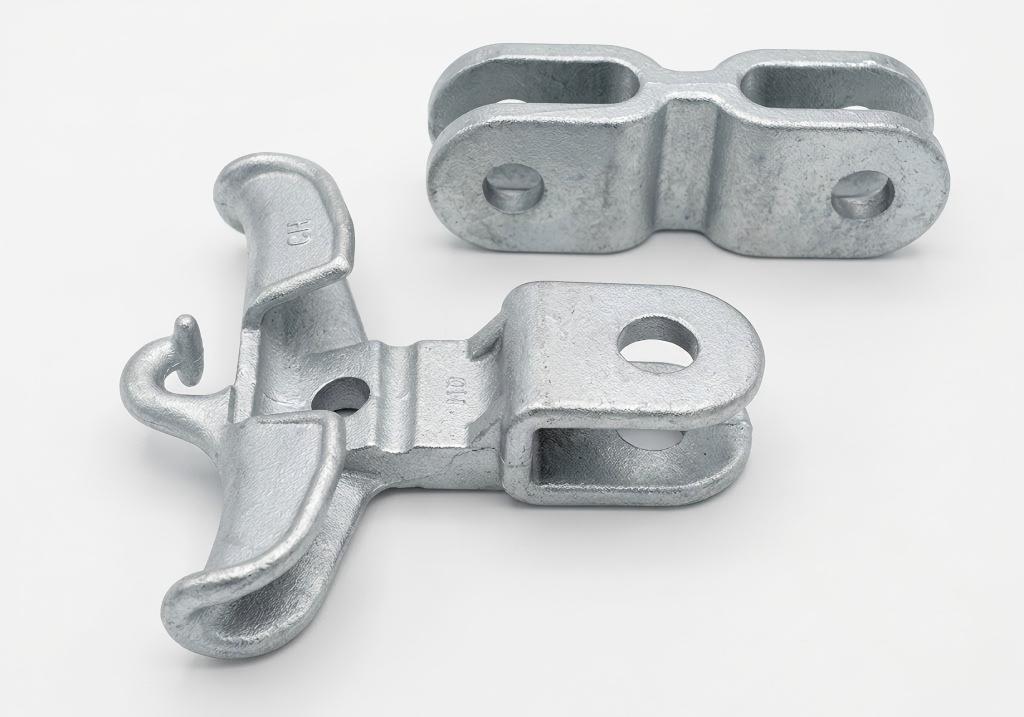
This existing fitting photo shows the connection openings and body profile. Similar outlines can belong to different drawings; the details below define the manufacturing and acceptance requirements.
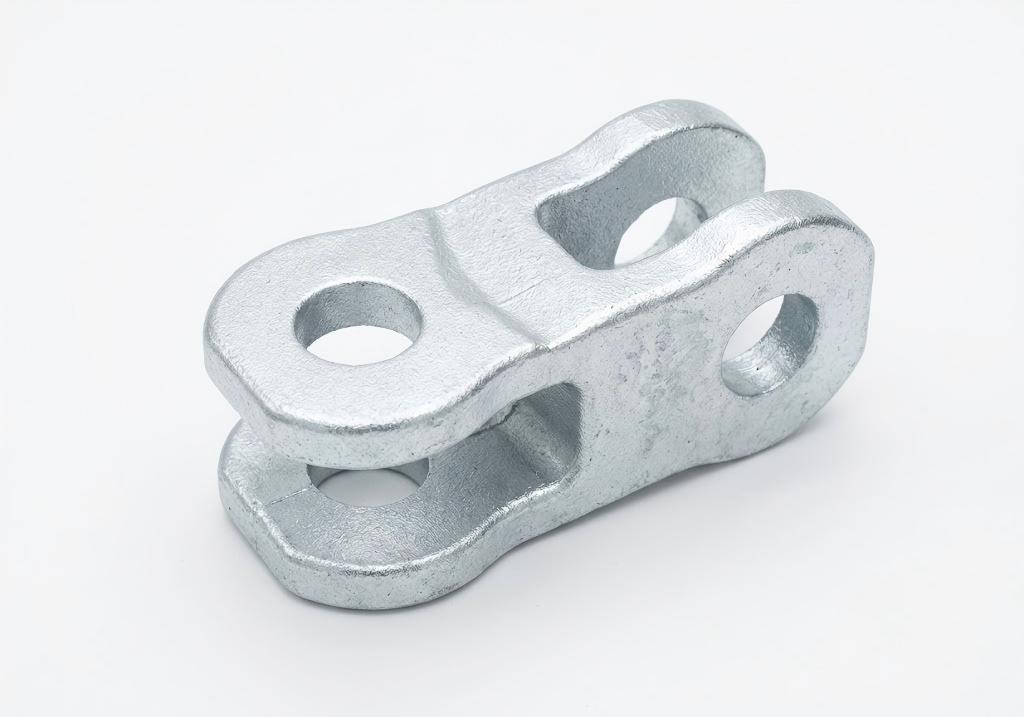
Identify hole diameters, spacing, alignment, and the mating pin requirements.
Dimension the opening, connecting features, and assembly envelope.
Specify the material grade and governing standard separately from the coating requirements. Identify which dimensions apply before coating and which apply to the finished component, including critical hole sizes and mating clearances.
Agree critical-dimension records, any load or specialist tests, marking, and packing. Qualification and test scope are confirmed per order.
Direct Answer
JK Casting supplies custom cast and CNC-machined clevis and clamp bodies, shackles, brackets, and related overhead line components made to buyer-controlled drawings or samples. Socket-eye and ball-eye style fittings, yoke plates, and other listed part families require a drawing-based feasibility review. Material standards, interfaces, load requirements, corrosion protection, testing, traceability, and project approvals remain buyer-controlled and must be confirmed for every RFQ.
Power line hardware OEMs and project suppliers often need components that must fit an existing assembly or controlled drawing. Small changes in hole position, pin clearance, load direction, casting geometry, or machined surfaces can affect installation.
Each RFQ is checked against its drawing, material, surface treatment, quantity, service conditions, inspection plan, and approval requirements. Listing a part family does not confirm stock, certification, or automatic manufacturability.
Power Hardware Sample Photos
These photos show representative part geometries, not standard catalog SKUs. Exact product name, drawing revision, material, surface treatment, load requirements, and inspection plan are confirmed from the buyer's evidence before quotation.
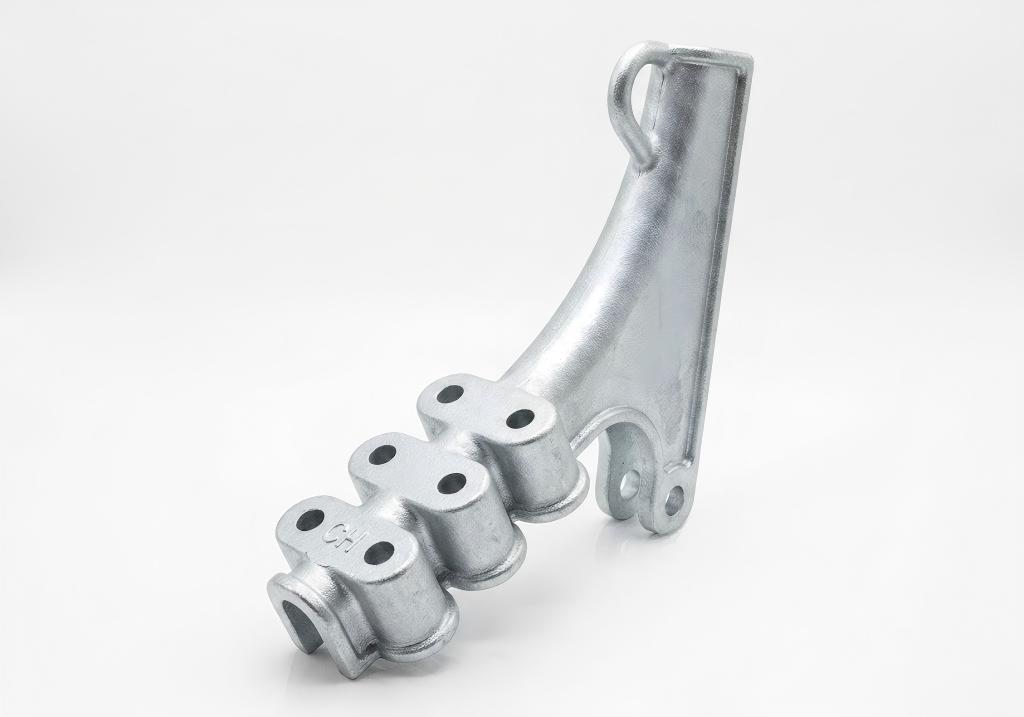
Representative cast utility hardware shape for drawing-based review.
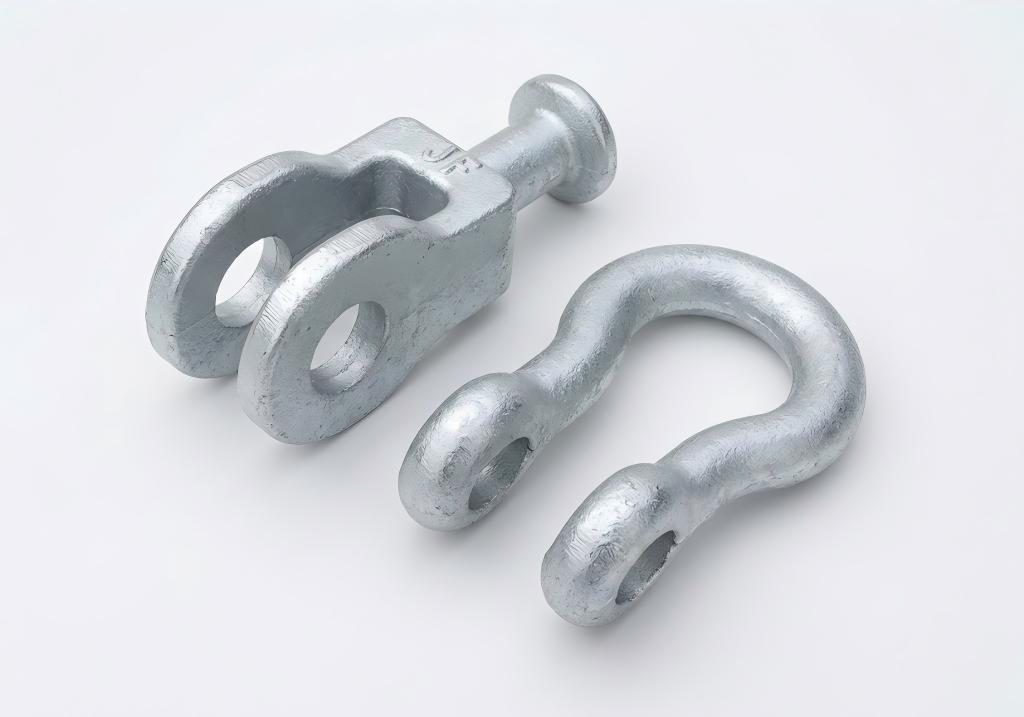
Fitting bodies, eyes, links, and connection features are reviewed against the controlled drawing.
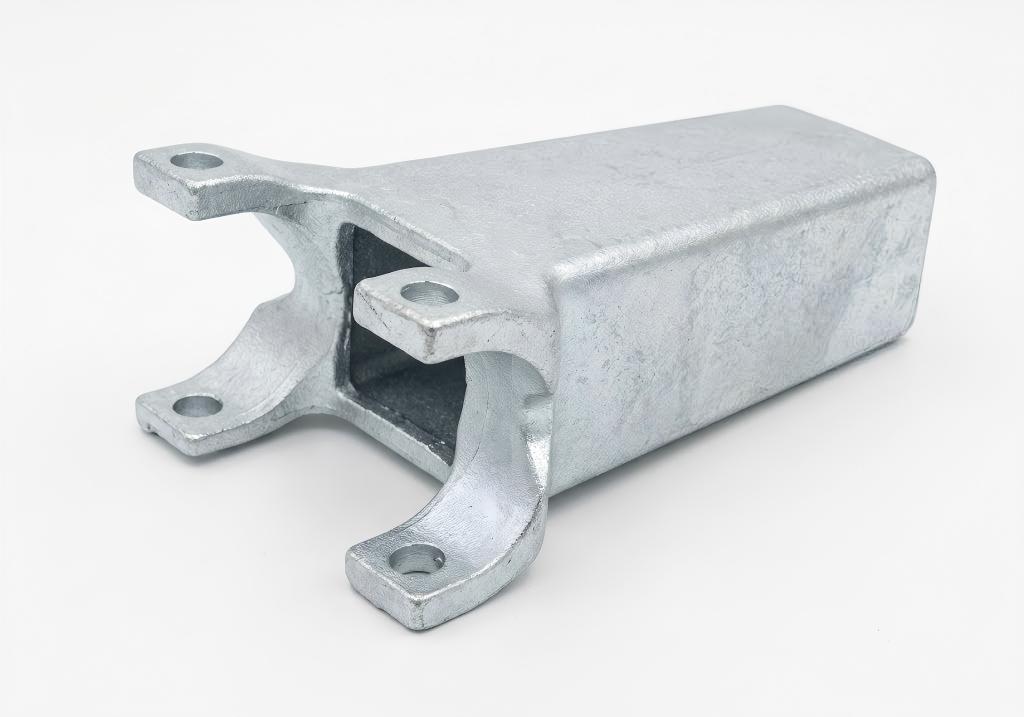
Surface treatment and assembly features are confirmed according to project requirements.
Connection features, up close
The clip shows rows of metal fitting components with eye-shaped ends and transverse holes. Use these visible features to identify what your drawing must define before requesting a quotation.
For repeat supply, include quantity per part number, the first batch, and expected call-offs. The clip illustrates component geometry; project suitability is reviewed against your requirements.
Manufacturing Review
A useful quotation starts with the actual assembly and duty. The RFQ review connects geometry, material, casting route, machined interfaces, surface protection, inspection, documentation, marking, and packing instead of treating each requirement separately.
Check the latest drawing, material, assembly interfaces, duty, quantity, and applicable requirements.
Review geometry, material, and quantity against the casting route and any additional production operations.
Define holes, faces, slots, and pin locations for machining the casting interfaces.
Check the coating or galvanizing requirements against the buyer's specification and assembly clearances.
Agree critical checks and documentation, traceability, marking, packing, and delivery batches for repeat supply.
Two fittings with a similar outline can have different interface, load, corrosion, and approval requirements. Include the buyer-controlled details that determine fit and project acceptance.
Power Line Hardware FAQ
JK Casting reviews clevises, shackles, socket-eye and ball-eye style fittings, yoke plates, brackets, hangers, support fittings, and suspension, tension, and dead-end clamp bodies for overhead power line assemblies. Each RFQ is checked against its drawing, material grade and governing standard, surface treatment, quantity, service conditions, and inspection plan. Listing a part family here does not confirm stock, certification, or automatic manufacturability.
Yes. Quotations are built from a controlled drawing, 3D model, or physical sample rather than a stocked catalog. State whether the enquiry covers the casting body alone or includes pins, bolts, nuts, washers, and other retaining parts; their inclusion and sourcing feasibility must be confirmed in the quotation rather than assumed. Final quotation depends on having enough information to confirm geometry, interfaces, material, quantity, surface treatment, inspection, and project requirements.
Yes. The RFQ review connects casting geometry, machined interfaces, and surface protection in a single quotation. Specify the material grade and governing standard separately from the coating or galvanizing requirement, and identify which dimensions apply before coating and which apply to the finished component, including critical hole sizes and mating clearances. The final manufacturing route, inspection plan, and supplier responsibilities are confirmed before quotation.
Send the latest drawing revision, material grade and governing standard, coating or galvanizing standard, quantity and repeat demand, critical dimensions and tolerances (before and after coating), load or duty requirements, inspection and documentation plan, and packing requirements. State separately whether pins, bolts, nuts, washers, and other retaining parts are included in the enquiry.
Technical content reviewed by the JK Casting RFQ team. Last updated: .
Send the latest drawing, material grade and governing standard, coating or galvanizing standard, quantity, critical interfaces, duty, inspection, documentation, and packing requirements. State whether the enquiry covers the casting body alone or includes pins, bolts, nuts, washers, and other retaining parts. The team will review feasibility and return the questions needed for quotation.
Power-line hardware RFQ: define the fitting and its mating parts
Includes an editable worksheet for your purchasing and engineering review.