The short answer
JK Casting casts clevises, shackles and clamp bodies to the buyer’s drawing in carbon steel, ductile iron or grey iron, for pole line and power line hardware and for equipment linkages. Parts are supplied raw or machined, with galvanizing arranged to the agreed specification, and made to order, not from catalogue stock.
Common types
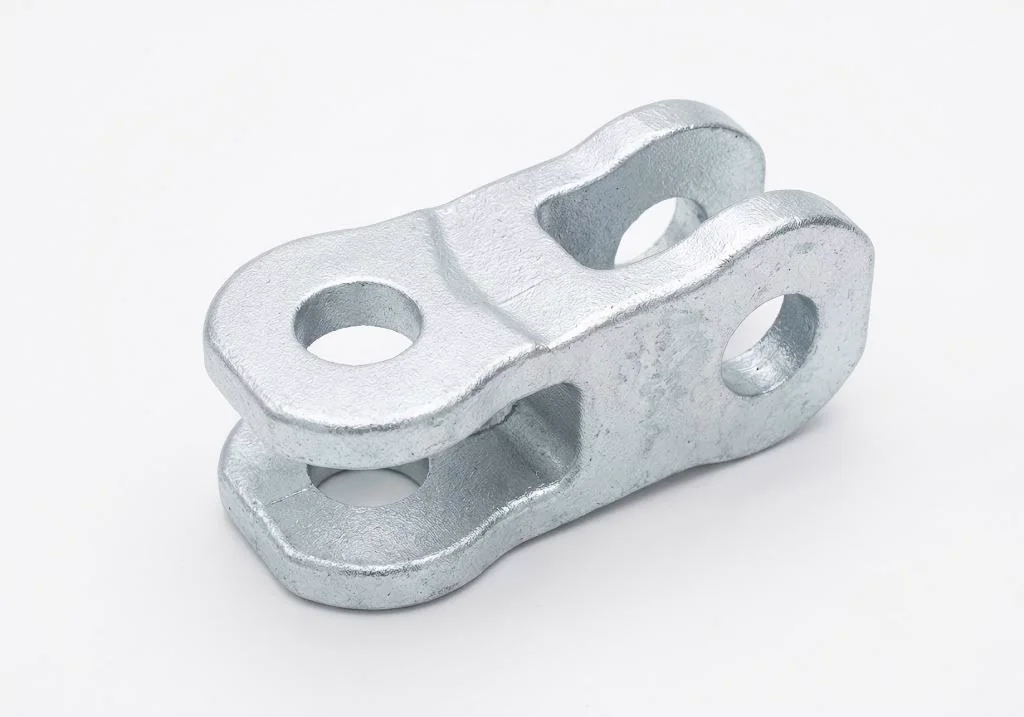
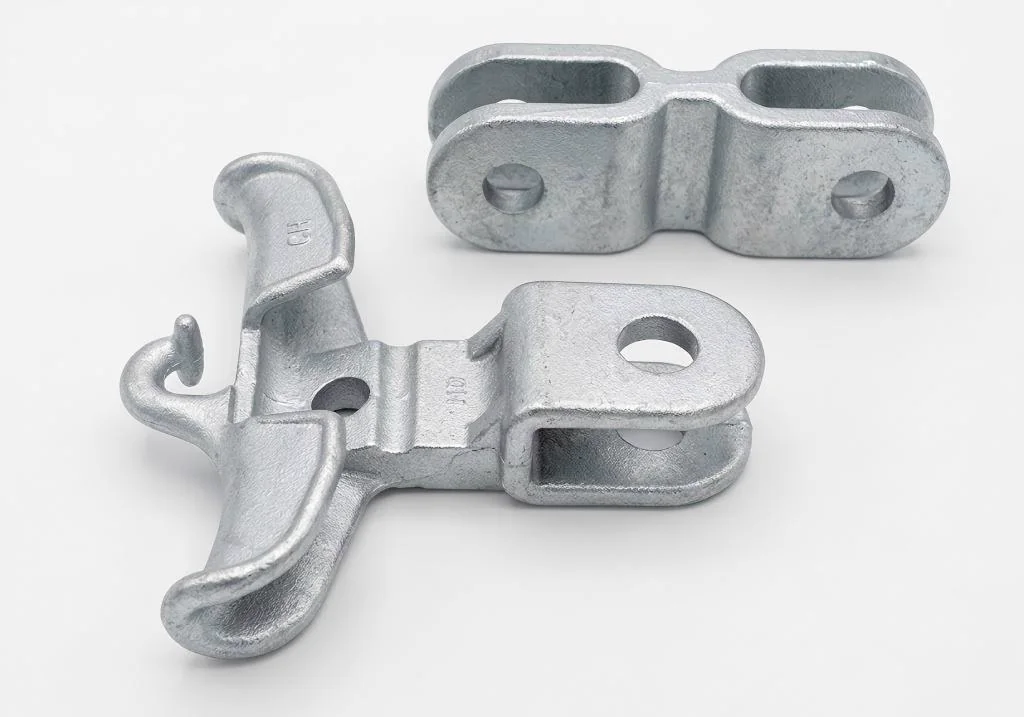
- Clevis fittings for pole line and power line hardware, defined by the opening, pin diameter, hole fit and centre distances.
- Shackles for pole line hardware, cast to the drawing.
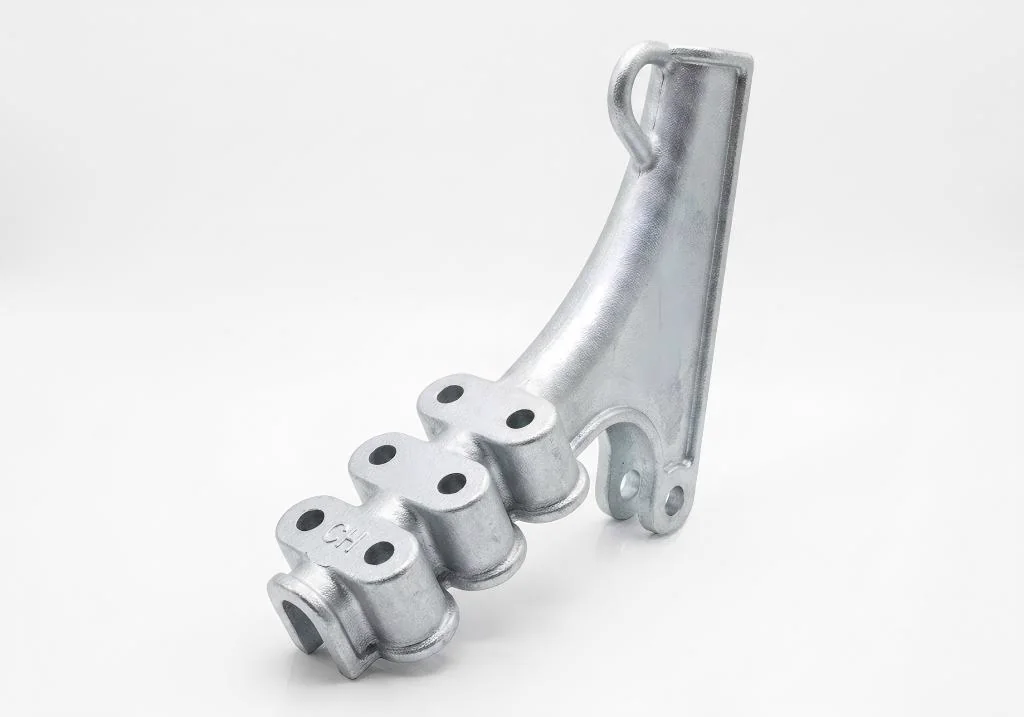
- Clamp bodies: for suspension, tension or dead-end clamps, specify the exact body and assembly.
- Cylinder clevises and linkage clevises for construction equipment.
- Socket-eye and ball-eye fittings and yoke plates need a drawing review before feasibility is confirmed.
Materials and grades
Regular materials are carbon steel, for example ZG230-450, ZG270-500 or ASTM A27 70-36; ductile iron, for example QT450-10 / EN-GJS-450-10; and grey iron where the drawing specifies it. The material specification on your drawing governs. Corrosion protection, such as galvanizing, is arranged to the agreed specification.
Casting route
Clevises, shackles and clamp bodies are sand cast, including resin-coated shell moulds where a cleaner surface helps. Smaller steel clevises with ribs and several functional features can suit investment casting within about 20 kg each, which reduces machining.
Typical machined features
- Pin holes and their fit
- The faces of the clevis opening
- Threaded holes
- Contact faces that control interchangeability
Identify which dimensions apply before galvanizing and which apply to the finished part, and mark any masked or uncoated zones.
What to send for a quote
- The part number and drawing revision
- Body only or complete assembly, with a bill of materials; state whether pins, bolts and retaining parts are in scope
- The opening, pin diameter, hole fit and centre distances
- The material specification
- The coating specification, masked zones and finished-size requirements
- Mechanical acceptance requirements and the test reports needed, from the approved project documents
- Sample quantity, first batch and annual forecast
The power line hardware RFQ checklist lists these points in detail.
How JK Casting makes clevis and shackle castings
JK Casting, a foundry in Gaomi, Shandong, China, founded in 2002, casts and machines clevises, shackles, clamp bodies and brackets to buyer drawings. The buyer defines the fit, loads, material and corrosion protection; a supplier photograph or a similar-looking fitting does not establish a working load or a utility approval. Each drawing is quoted separately, with tooling and unit price on separate lines. Orders are small to medium batches and repeat deliveries; one- or two-piece orders are rarely economical because a casting needs tooling before the first part is poured.
Related: power line hardware castings · construction and heavy equipment castings · steel castings
Need this part cast to your drawing?
Send the drawing for a quote — we reply within 24 hours.
Frequently asked questions
Do you make custom cast clevises and clamp bodies to drawing?
Yes. Clevises, shackles, clamp bodies and brackets are cast to the buyer’s drawing in carbon steel, ductile iron or grey iron, and supplied raw or machined. They are made to order, not catalogue stock.
Are pins and fasteners included?
State on the RFQ whether pins, bolts and retaining parts are in scope. The cast body and any such parts are listed as separate lines in the quotation.
Can you galvanize the castings?
Galvanizing is arranged to the agreed specification. State the specification, any masked or uncoated zones and which dimensions apply after coating.
Can you make socket-eye or ball-eye fittings and yoke plates?
They need a drawing review before feasibility is confirmed. Send the drawing, the material specification and the acceptance requirements.